One part of the practical driving test that many learners worry about is the manoeuvre. The good news is that the examiner isn’t looking for perfection—they want to see that you can complete the manoeuvre safely, under control and with good observation.
In this guide, we’ll explain the manoeuvres you may be asked to complete, what the examiner is looking for and how you can practise them with confidence before your driving test.
At a Glance
- You’ll normally be asked to complete one manoeuvre during your practical driving test.
- Observation is more important than completing the manoeuvre quickly.
- You can correct a mistake if it’s safe to do so.
- Good control and planning are key to success.
- Regular practice builds confidence.
Every learner finds manoeuvres challenging at first. With regular practice and clear instruction, they soon become a routine part of driving and nothing to fear on test day.
Top Tip: During your driving test, remember that observation is always more important than completing the manoeuvre in one attempt. If you need to stop and safely correct your position, that’s often better than continuing with a poor manoeuvre.
Which manoeuvres could you be asked to complete?
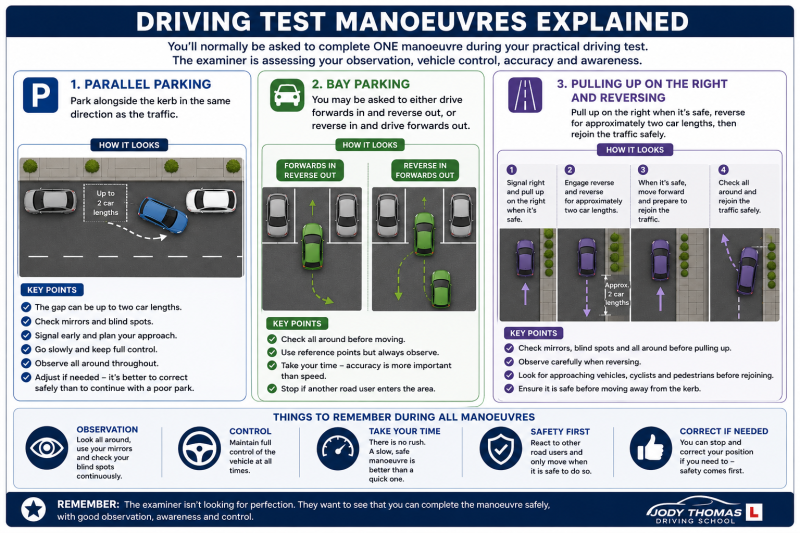
During your practical driving test, you’ll normally be asked to complete one of the following manoeuvres:
- Parallel parking
- Bay parking (driving in and reversing out, or reversing in and driving out)
- Pulling up on the right-hand side of the road and reversing for approximately two car lengths before rejoining the traffic safely
The examiner is assessing your observation, vehicle control, accuracy and awareness of other road users throughout the manoeuvre.
Parallel parking
Parallel parking is one of the most well-known driving test manoeuvres, but there’s no need to rush. The examiner is looking for good observation, effective vehicle control and the ability to park safely alongside the kerb.
If your vehicle ends up slightly further from the kerb than intended or you need to make a small correction, that’s usually acceptable provided it’s completed safely and under control.
Bay parking
You may be asked to either drive forwards into a parking bay and reverse out, or reverse into a bay and drive forwards out. Throughout the manoeuvre, the examiner will assess your observation, accuracy and awareness of pedestrians and other vehicles.
Take your time, use effective all-round observation and don’t be afraid to stop if another road user enters the area.
Pulling up on the right and reversing
This manoeuvre requires you to pull up on the right-hand side of the road when it’s safe to do so, reverse for approximately two car lengths and then rejoin the traffic safely.
The examiner is looking for careful observation throughout the manoeuvre, particularly before moving away and while reversing. Always check for approaching vehicles, cyclists and pedestrians before changing direction or rejoining the road.
What is the examiner looking for?
The examiner isn’t judging how quickly you complete the manoeuvre. Instead, they’re assessing whether you can:
- Maintain full control of the vehicle.
- Carry out effective all-round observation.
- Respond safely to other road users.
- Position the vehicle accurately.
- Complete the manoeuvre safely and confidently.
Common mistakes during manoeuvres
Many learners lose confidence during manoeuvres because they rush or focus too much on getting the vehicle into the perfect position. Remember, the examiner is assessing your safety, observation and control—not whether you complete the manoeuvre perfectly first time.
Observation
Failing to carry out effective all-round observation is one of the most common reasons learners receive faults during manoeuvres. Check all around the vehicle before moving and continue observing throughout the manoeuvre.
Moving too quickly
There’s no benefit in rushing. Completing the manoeuvre slowly and under full control gives you more time to observe and react to other road users.
Poor steering control
Good steering control helps you position the vehicle accurately and complete the manoeuvre smoothly. Avoid making sudden or unnecessary steering movements.
Not correcting mistakes
If you realise you’ve misjudged your position, don’t panic. You’re allowed to stop and correct your position, provided you do so safely and maintain effective observation throughout.
How to improve your manoeuvres
Practise regularly
The more often you practise each manoeuvre, the more natural it will become. Repetition builds confidence and helps develop good habits.
Use reference points
Your instructor may teach you reference points to help position the car accurately. These are useful while learning, but always combine them with effective observation.
Stay calm
It’s normal to feel nervous during manoeuvres, especially on test day. Take your time, breathe, and remember that safe observation is more important than speed.
Frequently Asked Questions
Can you fail your driving test because of a manoeuvre?
Yes, but only if your manoeuvre results in a serious or dangerous fault. Minor mistakes can still result in a pass, provided you complete the manoeuvre safely and maintain good observation throughout.
Which manoeuvre is most common on the driving test?
There isn’t a most common manoeuvre. The examiner will choose one manoeuvre from those used during the practical driving test, and you should be prepared to complete any of them confidently.
Can you correct a mistake during a manoeuvre?
Yes. If you realise you’re out of position, you’re allowed to stop and correct the manoeuvre, provided you do so safely and continue to carry out effective observation.
Do I have to park perfectly?
No. The examiner is assessing your safety, observation and control rather than whether the vehicle is perfectly positioned. A safe manoeuvre is always more important than a perfect one.
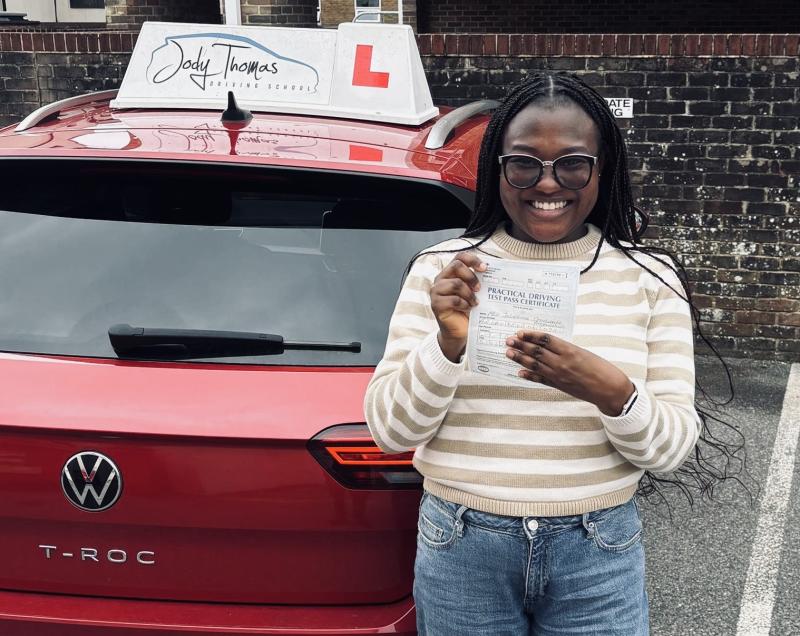
With the right tuition and regular practice, driving test manoeuvres soon become a natural part of safe, confident driving.
Ready to prepare for your driving test?
Whether you’re preparing for your practical driving test or want to improve your confidence with driving manoeuvres, our experienced instructors can help. We offer professional driving lessons, automatic driving lessons and intensive driving courses across Kent & East Sussex. Get in touch today to book your lessons.
Looking for more learner driver advice? Visit our Learn to Drive Hub for expert guides covering driving lessons, theory tests and practical driving test preparation.