
Passing your driving test first time is a goal for many learner drivers, but success isn’t about luck. It’s about good preparation, building confidence and developing safe driving habits behind the wheel.
At Jody Thomas Driving School, we’ve helped hundreds of learners pass their practical driving test. In this guide, we’ll explain what really helps learners succeed, the common mistakes to avoid and how you can give yourself the best possible chance of passing first time.
At a Glance
- Passing first time is about good preparation, not luck.
- Regular driving lessons and private practice can significantly improve your chances of success.
- Learn from your mistakes and focus on becoming a safe, confident driver.
- Stay calm and keep concentrating, even if you think you’ve made a mistake.
- Your instructor will recommend your driving test when you’re consistently driving safely and independently.
Every learner develops at a different pace. Don’t compare yourself with friends or family. Focus on building the skills, knowledge and confidence needed to become a safe driver for life.
What is the first-time driving test pass rate?
Around half of learner drivers pass their practical driving test on their first attempt. While the national pass rate changes over time, your own chances of success depend far more on how well prepared you are than on the overall statistics.
Regular driving lessons, private practice and experience driving in different road, traffic and weather conditions will all help you become a safer, more confident driver.
Why do people fail their driving test?
Many learners don’t fail because they can’t drive. They fail because of avoidable mistakes, nerves or a lack of experience in certain situations. Understanding the most common reasons for failing can help you prepare more effectively and avoid making the same mistakes. If you’d like to learn more about how faults are assessed, read our guide to Driving Test Faults Explained.
The most common reasons people fail their driving test
Many learner drivers don’t fail because they can’t drive. Instead, they lose marks for small mistakes, poor observation or allowing nerves to affect their judgement. Understanding the most common reasons for failing can help you prepare more effectively and avoid making the same mistakes.
Observation at junctions
One of the most common reasons for failing is poor observation when emerging from junctions. Always take your time, look carefully in all directions and only move when it’s safe to do so.
Poor mirror checks
Examiners expect you to check your mirrors before changing speed, changing direction or signaling. Making regular mirror checks soon becomes a habit with practice.
Incorrect positioning
Good road positioning shows that you’re planning ahead. Whether you’re approaching a roundabout, turning at a junction or driving along a narrow road, keeping the correct position helps you stay safe and avoid faults.
Responding to road signs and markings
Missing speed limit signs, ignoring road markings or entering the wrong lane can all lead to driving faults. Keep scanning the road ahead so you have plenty of time to react.
How to improve your chances of passing first time
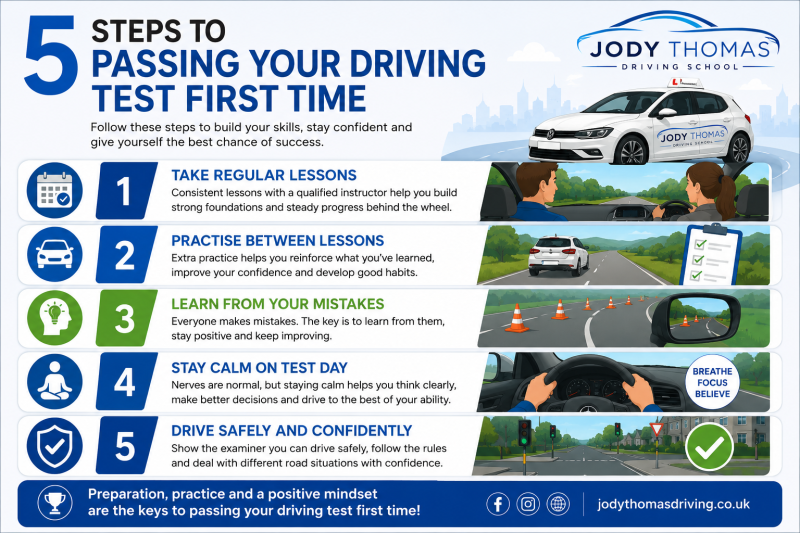
Take regular driving lessons
Regular lessons help you build confidence and develop your skills consistently. Long gaps between lessons can slow your progress, as valuable lesson time is often spent revisiting topics you’ve already covered.
Practise between lessons
If you have access to a suitable car and supervising driver, private practice can make a huge difference. It allows you to reinforce what you’ve learnt during professional lessons and gain experience in a wider variety of road and traffic conditions.
Don’t just memorise test routes
Although it’s helpful to become familiar with local roads, the driving test is designed to assess your ability to drive safely in any situation. Focus on developing good observation, planning and decision-making skills rather than trying to memorise individual routes.
Stay calm on the day
It’s perfectly normal to feel nervous before your driving test. Try to get a good night’s sleep, arrive in plenty of time and remember that the examiner is looking for safe driving—not perfection. If you make a small mistake, stay focused and continue driving safely.
Is it better to have a mock driving test?
Mock driving tests are an excellent way to prepare for the real thing. They help you experience test conditions, identify areas for improvement and build confidence before your practical driving test. Many learners find that completing one or two mock tests helps reduce nerves on the day of their test.
What should you do on the day of your driving test?
Preparing properly on the day of your driving test can help you stay calm and focused. Give yourself plenty of time to arrive, bring the correct documents and listen carefully to your examiner’s instructions. Remember, the examiner wants to see that you can drive safely and independently.
Get a good night’s sleep
Being well rested will help you concentrate and make better decisions during your test.
Arrive early
Aim to arrive at least 10–15 minutes before your appointment. This gives you time to settle your nerves without feeling rushed.
Bring everything you need
Make sure you have your provisional driving licence and anything else required for your test. Your instructor can help you check that everything is ready beforehand.
Stay focused after mistakes
Many learners think they’ve failed after making a small mistake. In reality, you can often still pass. Stay calm, keep concentrating and drive safely for the remainder of the test.
Frequently Asked Questions
Can I still pass if I make a mistake during my driving test?
Yes. Many learners think they’ve failed after making a small mistake, but that’s often not the case. Minor driving faults are allowed, provided they don’t affect safety. Stay calm, keep concentrating and continue driving to the best of your ability.
How many faults can you get and still pass?
You can receive up to 15 driving faults (sometimes called minor faults) and still pass your practical driving test. However, committing one serious or dangerous fault will result in a fail.
Should I tell the examiner I’m nervous?
It’s perfectly normal to feel nervous before your driving test. You don’t have to mention it, but many learners find that letting the examiner know helps them relax. Examiners understand that driving tests can be stressful and will do their best to help you feel at ease.
Is it easier to pass in an automatic car?
Many learners find automatic cars easier to drive because they don’t have to worry about clutch control or changing gears. This allows them to focus more on observation, planning and hazard awareness. Whether you choose manual or automatic depends on your individual needs and goals.
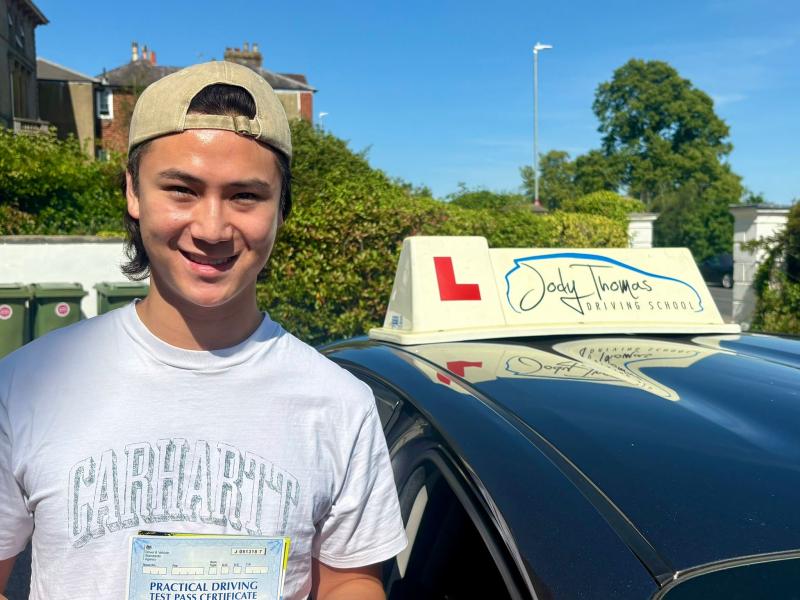
Passing your driving test first time starts with the right preparation, expert tuition and regular practice. Every learner’s journey is different, but with the right support, passing first time is an achievable goal.
Ready to pass your driving test?
If you’re preparing for your practical driving test, our experienced instructors can help you build the confidence and skills needed to pass safely. Whether you’re looking for driving lessons, automatic driving lessons or an intensive driving course, we’ll match you with the right instructor for your needs. Get in touch today to start your journey towards becoming a safe and confident driver.